

Kareri Lake or Triund?
Choose Triund if you want a steep half-day climb to a ridge with one of the best views of the Dhauladhar, and you don’t mind company. Choose Kareri Lake if you’d rather walk longer and quieter, through forest and along a river, to a glacial lake below the snow. Neither needs trekking experience. Triund is harder per hour; Kareri is longer overall.
We started out as guides on these hills, and “which one?” is one of the questions we’re asked most. Here’s how we answer.
Kareri Lake and Triund at a glance
| At a glance | Triund | Kareri Lake |
|---|---|---|
| Highest point | About 2,875 m | About 2,934 m |
| Distance | About 9 km each way from McLeod Ganj | About 13 km each way from the road head |
| Usual length | 1 day, or 2 with a night | 2 days, sometimes 3 |
| Difficulty | Easy–moderate, steep finish | Moderate, long but steady |
| Crowds | Busy, especially weekends | Quiet |
| Best months | Mar – Jun, Sep – Nov | Apr – Jun, Sep – Nov |
| What you get | A ridge facing the Dhauladhar | A glacial lake below the snow |
What Triund is like
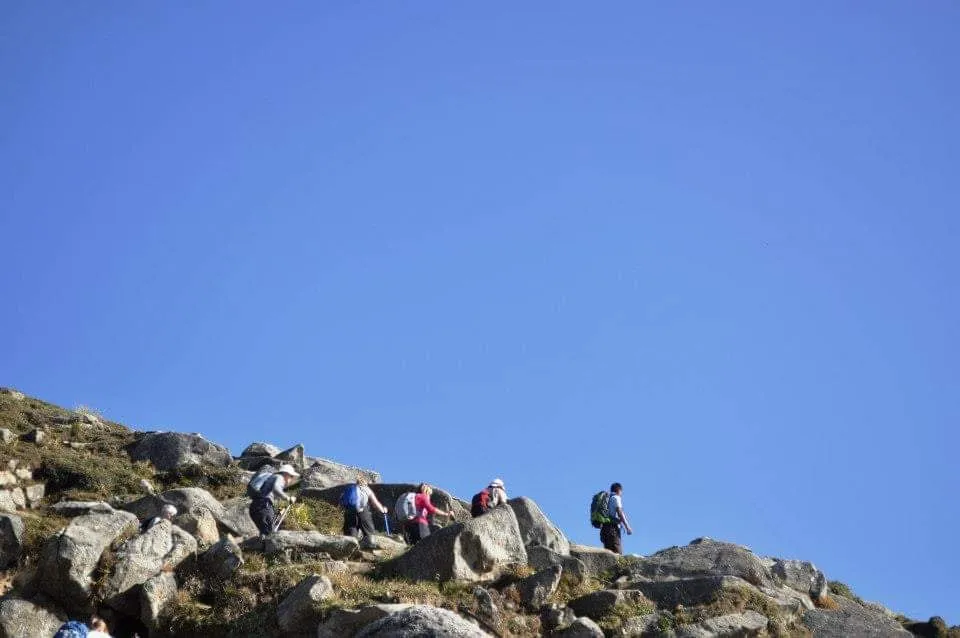
Triund starts in McLeod Ganj or at the Galu Devi temple above Dharamkot, and climbs through oak and rhododendron forest to a long, grassy ridge right under the Dhauladhar. The first part is steady, with tea stalls along the way. The last stretch is a series of steep, rocky bends, and that’s where people slow down.
At the top, the view is the reward: the snow wall of the Dhauladhar on one side, the whole Kangra valley on the other. Most people walk up and down in a day; a night on the ridge gives you sunset and sunrise. Our Triund or Indrahar Pass post has the full picture.
What Kareri Lake is like
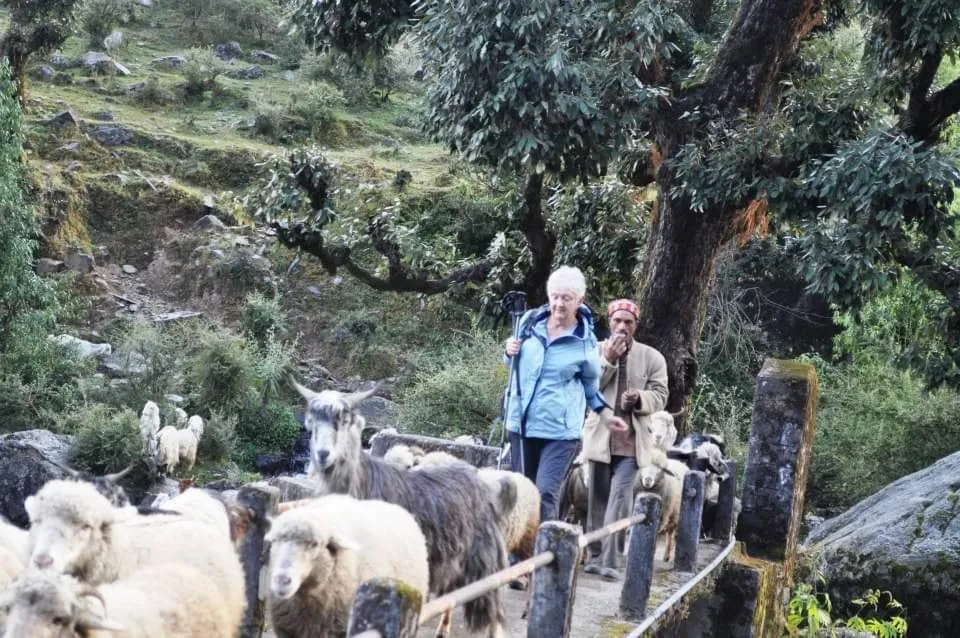
Kareri starts lower, in the Gaddi villages in the hills beyond Dharamshala. You drive to the road head below Kareri village, then follow the Nyund stream up its valley, through forest, across small bridges and past shepherds’ huts. The first few kilometres are shady and gentle; the last part opens out and gets rockier as you climb towards the lake.
The lake itself sits at about 2,934 m in a bowl of mountains. It’s fed by snowmelt from the Dhauladhar, and the water is clear and very cold. A small shrine to Shiva and Shakti stands on a rise above it. You’ll often share the meadows with Gaddi shepherds and their flocks.
Which is harder?
People are often surprised by this. Triund’s last hour is the steepest climbing on either trek. Kareri never gets that steep, but it’s longer, about 13 km each way, so you’re walking for longer and usually need two days.
- If you have strong legs but limited time, Triund suits you.
- If you’d rather walk at an even pace for longer, Kareri suits you.
- If you have bad knees, Kareri’s gentler gradient is often easier on the way down, even though it’s further.
Crowds and quiet
Triund is the most popular trek near Dharamshala. On a sunny weekend in May, expect a steady stream of walkers and a lively ridge. Go on a weekday or stay the night and it’s calmer.
Kareri is a different world. You might walk for an hour without meeting anyone except a shepherd. If peace is the point, Kareri wins easily.
Getting to the start
- Triund: walk from McLeod Ganj, or take a taxi to the Galu Devi temple above Dharamkot and start there.
- Kareri: drive from Dharamshala towards Ghera and Kareri village; the road ends below the village and the trail starts there. A local driver will know the way, and it’s worth arranging your pick-up for the walk down too.
Where you sleep
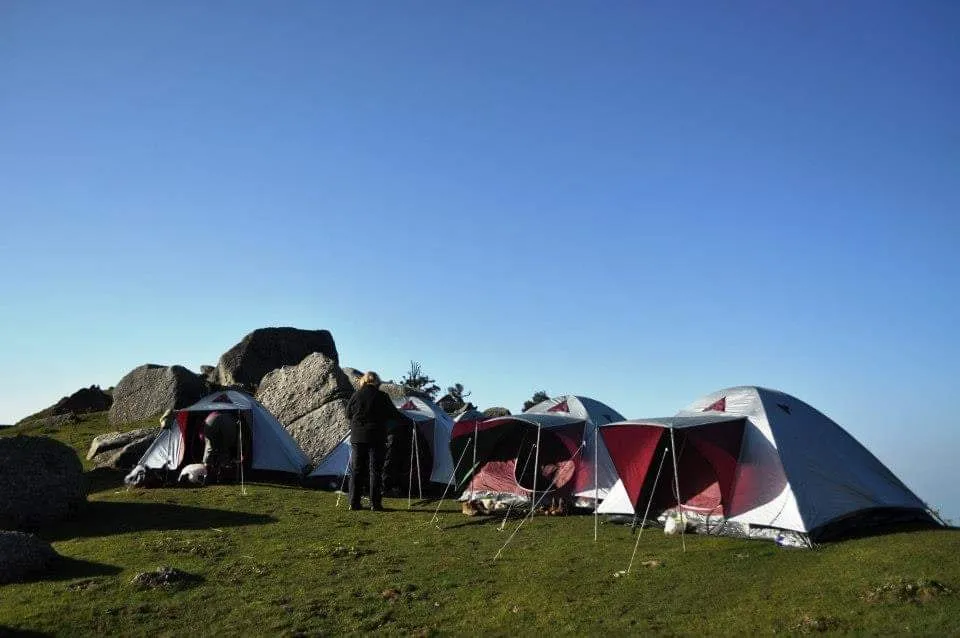
On Triund, you can walk up and down in a day, or camp at the designated campsite with a forest department permit. On Kareri, most people camp near the lake or in the meadows below it.
Camping rules in the Dhauladhar change often, so check before you go, or go with a registered local guide who arranges the permit and the tents. Carry all your rubbish back down: both trails suffer from what people leave behind.
Is Kareri safe?
Yes, in the right season and with a bit of care. The risks are different from Triund’s:
- Streams. The trail follows and crosses the Nyund stream. In the monsoon, and on warm spring afternoons when the snow melts fast, it can rise quickly. Don’t cross where the water is fast and above your knees.
- Getting lost. The trail is quieter and less marked than Triund’s. Go with someone who knows it, or a local guide, especially on your first visit.
- Weather. Clouds build over the Dhauladhar in the afternoon. Start early and aim to reach the lake by early afternoon.
What to pack for either trek
- Good walking shoes with grip, and trekking poles
- A warm layer and a waterproof, even in May
- Water and snacks; there are fewer stalls on Kareri than on Triund
- Sun hat, sunglasses and sunscreen
- A head torch, and a bag for your rubbish
In winter
Kareri Lake is usually frozen from early December until March or April, and the upper trail can be deep in snow. Triund often has snow on the ridge from December.
In recent winters, the Kangra district administration has required prior permission from the Superintendent of Police for both Kareri and Triund, cancelled automatically whenever the weather office issues an alert, and banned trekking above 3,000 m altogether. Our Triund in winter post explains what that means in practice.
Can you do both?
Yes, and plenty of people do: Triund one weekend, Kareri the next, or Triund first and Kareri a few days later, once your legs have adjusted. They start from different places, so you’ll go back to Dharamshala in between.
If you get the taste for it, both trails lead on to bigger things. From Kareri, the trail continues over the Minkiani Pass at about 4,250 m towards Chamba, a serious trek for experienced walkers. From Triund, the path climbs on to Indrahar Pass at 4,342 m. Neither is a first trek.
So, which one?
Choose Triund if:
- you have one day, or one night
- you want the big view of the Dhauladhar without a long walk
- you’re fine with company on the trail
Choose Kareri Lake if:
- you have two days
- you’d rather walk longer at an easier gradient
- you want forest, river, shepherds and a lake, and not many people
If you’re over 50 and wondering whether either is for you, our post on trekking in the Himalaya over 50 and 60 is a good place to start.
Our Triund trek and Bir Billing flight includes a night on the ridge, and for Kareri we can arrange a local guide, tents and a driver. The Dharamshala guide covers getting here and where to stay. Send us your dates and how much walking you’d like, and we’ll tell you which one fits.
Quick answers
Which is better, Kareri Lake or Triund?
Neither; they're different walks. Triund is a short, steep climb to a ridge with a huge view of the Dhauladhar, busy at weekends. Kareri Lake is a longer, gentler, much quieter walk through forest and along a river to a glacial lake.
Is the Kareri Lake trek difficult?
It's moderate. The trail is about 13 km each way from the road head, mostly a steady climb through forest and along a stream, with a rockier final section. It's longer than Triund, so most people take two days, but no single stretch is as steep as Triund's last climb.
What is the altitude of Kareri Lake?
About 2,934 m (9,626 ft), a little higher than Triund at about 2,875 m. Both are low enough that altitude sickness is uncommon.
When is the best time for the Kareri Lake trek?
April to June and September to November. The lake is usually frozen from early December to March or April, and the monsoon in July and August brings swollen streams and slippery trails.
Can you do Kareri Lake in one day?
Only if you're very fit and start at dawn: it's about 26 km there and back. Most people walk up one day, sleep near the lake, and walk down the next.
Do you need permission for Kareri or Triund in winter?
In recent winters, yes. Kangra district has required prior permission from the Superintendent of Police for Kareri, Triund and Adi Himani Chamunda, cancelled whenever there's a weather alert. Check the current order before you go.
Sources
Last updated


