

Spiti Valley in winter: is it worth it?
Yes, Spiti is worth visiting in winter, but only if you go for what winter actually gives you: white villages, empty monasteries, frozen rivers and a valley that has gone quiet. If you want cafés, hot showers and a fixed date to be back at work, come between June and September instead.
We run Spiti Villa in Key village, a short drive above Kaza, and our family stays in Spiti through the winter. This is what we tell friends who ask us whether they should come in December.
Winter in Spiti at a glance
| Winter | What to expect |
|---|---|
| Season | November to March, coldest in January |
| Nights in Kaza | About −15 °C to −30 °C |
| Days | Around 0 °C, warm in the sun, cold in the wind |
| Road in | Shimla → Kinnaur → Kaza only |
| Closed | Kunzum Pass, the Manali road, Chandratal |
| Open | Kaza, Key, Kibber, Tabo, Dhankar, most villages |
| Days needed | 9–10 from Delhi or Chandigarh |
What a winter day here is actually like
Mornings start slowly. The sun doesn’t reach the valley floor until about nine, so nobody is in a hurry. You eat breakfast next to a bukhari (the iron wood stove every Spitian kitchen has), drink butter tea, and wait for the light.
By eleven it’s a different place. The sky is a hard, clear blue, the snow is blinding and you can walk around Key or Kaza in a down jacket without gloves. Most of our guests’ favourite photos are taken between eleven and three.
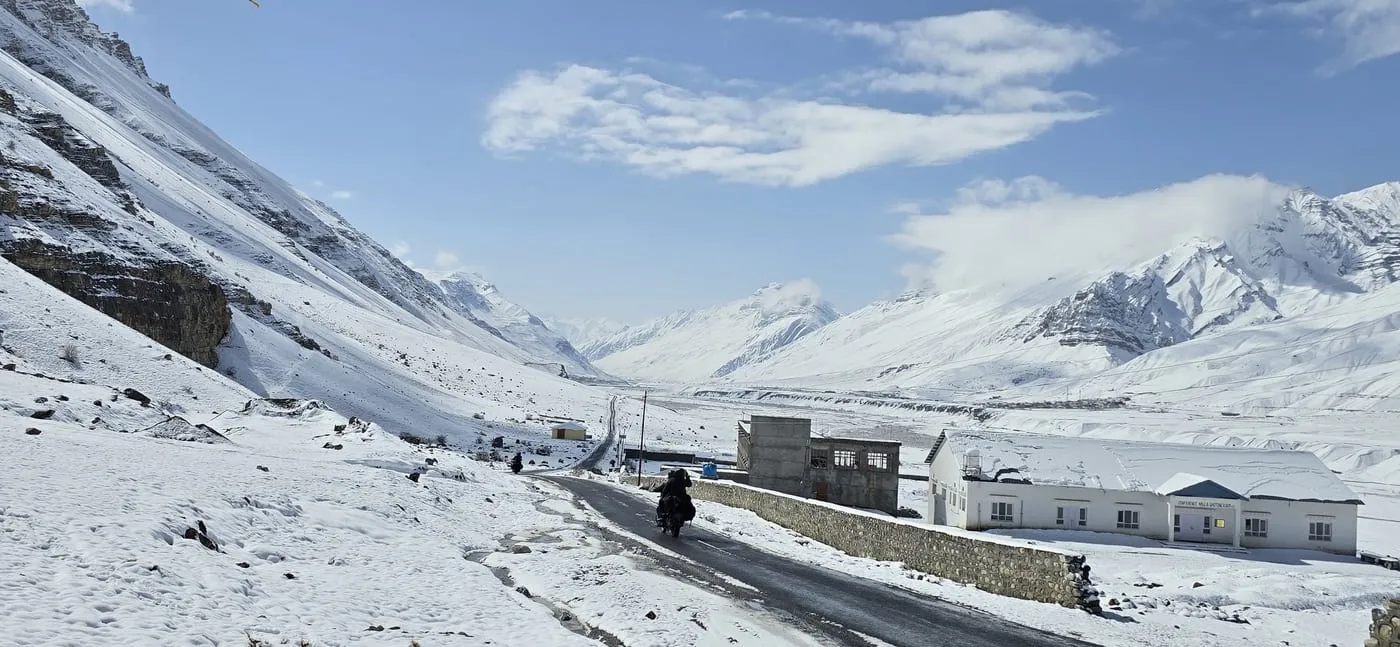
Afternoons go quickly. By four the shadows climb the slopes and the temperature drops fast. Evenings are spent indoors, around the stove, with thukpa and whoever else is staying. There’s not much to “do” after dark, and that’s the point for most people who come.
How cold does Spiti get, month by month?
These are rough figures for Kaza, which sits at about 3,650 m (11,980 ft). Kibber, Langza and Komic are higher and a few degrees colder.
- November: Nights around −10 °C, days often above freezing. Little snow, mostly clear skies. The easiest winter month.
- December: Nights −15 °C to −20 °C. First heavy snowfalls usually arrive mid to late month.
- January: The hardest month. Nights around −20 °C to −30 °C, the most snow and the most road closures.
- February: Still very cold, but the days are longer and the roads are cleared faster. A good month for snow leopards.
- March: Nights back around −10 °C. Snow is still on the ground, but things start to loosen up.
If it’s your first winter trip to the Himalaya, aim for late February or March. You still get the snow without January’s worst.
Is the road to Spiti open in winter?
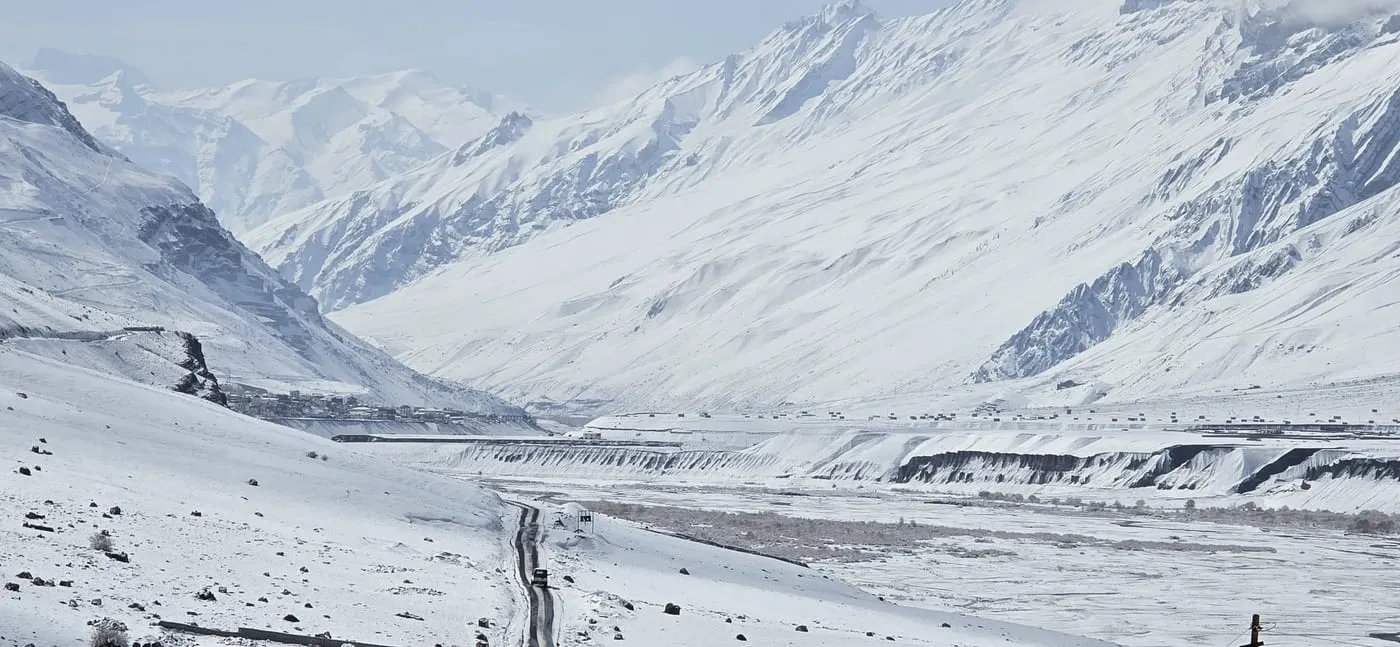
Only one road. In winter the way in is from Shimla, through Kinnaur (Rampur, Reckong Peo, Nako) to Tabo and Kaza. It’s kept open all year, and the Border Roads Organisation clears it after snowfall, but it does shut. A fresh landslide at Malling Nala near Nako, or a heavy dump of snow, can close it for a day or for several.
The Manali side over Kunzum Pass is closed from around November until June, and so is Chandratal. Don’t plan around them.
Two things follow from this:
- Keep two spare days at the end of your trip. They’re what saves a flight home when the road shuts.
- Go in, and come back, the same way. There’s no “circuit” in winter.
Is it safe to visit Spiti in winter?
It’s safe if you respect three things.
Ice. The real danger isn’t fresh snow, it’s black ice on bends that stay in shadow all day. Our drivers have done these roads every winter of their lives, and they still drive them slowly. If you’ve never driven on ice, don’t make Spiti in January your first time. Hire a driver.
Altitude. Kaza is high enough that a fast climb makes people ill. The Kinnaur route helps here: you sleep at Sarahan or Sangla, then Nako or Tabo, before Kaza, so your body gets time. Drink water, go easy on the first day, and tell your host if a headache won’t go away. Our post on altitude sickness and oxygen in Spiti explains what to watch for.
Distance from help. There’s a hospital in Kaza, but serious care is a long day’s drive away. Carry your own basic medicines and travel insurance that covers high altitude.
What’s open in Spiti in winter, and what isn’t
More is open than people expect, and less than they’d like.
Open:
- Key Monastery, Kaza’s monastery, Dhankar and Tabo. Monks live there all year, and visiting in winter, with no tourist buses, is something else.
- Homestays in Kibber, Langza, Key and Kaza. Fewer than in summer, so book ahead and confirm a few days before.
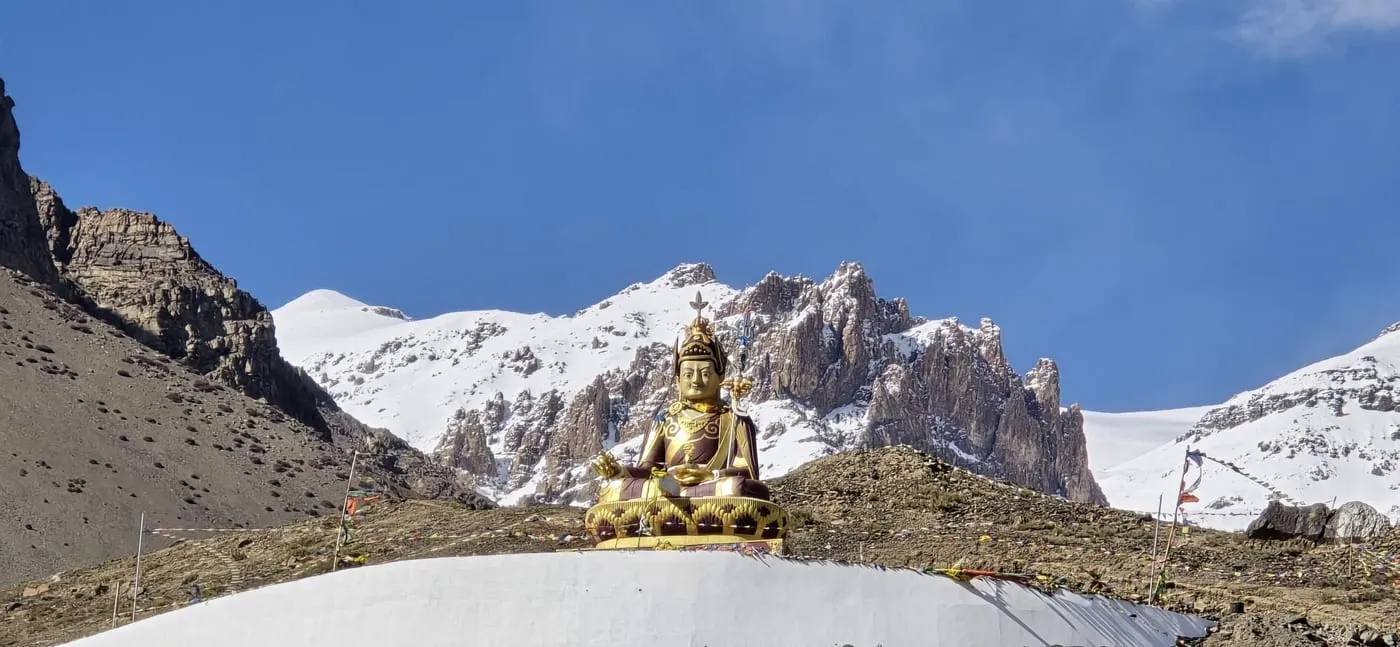
- The Langza Buddha, when the road up is clear. Often it is by mid-morning.
- Petrol in Kaza, and ATMs that can be empty or offline. Bring cash.
Closed or difficult:
- Running water. Pipes freeze. Most homes switch to dry toilets (a traditional composting toilet) and bring water in by bucket. You’ll get hot water for washing, but probably not a shower.
- Power. It cuts out after heavy snow. Bring a power bank and keep it inside your sleeping bag at night; cold drains batteries fast.
- Phone signal. Usually fine in Kaza, patchy or gone in the villages. Tell people at home not to worry if you go quiet for a day.
- Restaurants and cafés. Most close for the season. You’ll eat what your host cooks, which is usually the best food in the valley anyway.
The snow leopard question
Every winter, more people come to Spiti hoping to see a snow leopard. Your chances are real. Around Kibber, local spotters find them most winters, usually between January and early March, when the cats follow blue sheep down to lower slopes.
But it’s wildlife, not a zoo. Some groups see a cat on the first morning; others spend five days scanning ridges and go home with photos of ibex and a fox. Give it at least four or five days around Kibber, dress for hours of standing still, and choose people who keep a respectful distance. The district has already banned car rallies in snow leopard habitat because of the noise. Our winter Spiti and snow leopard trail is built around that slow pace.
How many days do you need?
From Delhi or Chandigarh, plan nine or ten days for a winter trip. That gives you two days to get to Kinnaur, a night there to acclimatise, a day to Kaza, four or five days in Spiti, the same road back, and two spare days. Less than that and you’ll spend the whole trip in a car, worrying about the road.
Our Shimla to Kaza taxi page has more on the drive itself, and the Spiti Valley guide covers every season.
Who will love Spiti in winter, and who should skip it
You’ll probably love it if:
- you like the cold more than you fear it
- silence, snow and stars are the reason you’re coming
- your dates can move by a day or two
- you’re happy with simple food, a dry toilet and early nights
You’d be happier in summer if:
- this is your first trip anywhere high
- you need to be back on a fixed day
- you have heart or lung problems, or you’re travelling with very young children
- you want to see Chandratal or drive the full Spiti circuit
If you’re not sure, message us. We’ll tell you honestly whether your dates will work, and if they won’t, which month will.
Quick answers
Is Spiti Valley open in winter?
Yes. Spiti stays reachable all winter by the Shimla–Kinnaur–Kaza road, which is kept open year-round, though snow or landslides can shut it for a day or several. The Manali side over Kunzum Pass is closed from around November until June.
How cold is Spiti in winter?
In Kaza, nights in January and February usually fall to around −20 °C and can touch −30 °C. Days hover around freezing, and the sun feels warm when there's no wind. Higher villages like Kibber and Langza are colder.
Is it safe to visit Spiti in winter?
It's safe with the right driver and spare days. The risks are black ice on shaded bends, road closures after snowfall and altitude. Travel with a local driver who drives these roads every winter, keep two buffer days, and climb slowly through Kinnaur.
Is Spiti better in winter or summer?
Summer (June to September) is easier: every road and homestay is open, including Chandratal and the Manali side. Winter is harder but quieter, white and the only season for snow leopards. Pick summer for a first visit, winter if you want snow and silence.
Can you see snow leopards in Spiti in winter?
Sometimes. Local spotters around Kibber find them most winters, usually from January to early March when the cats follow blue sheep down the slopes. Nobody honest can promise a sighting, so plan at least four or five days around Kibber.
When should you avoid Spiti?
Avoid January if you can't handle −25 °C nights or have no flexibility in your dates. Avoid late July and August if you want to cross from Manali, because monsoon rain brings landslides on the Kinnaur side.
Sources
Last updated


