

Trekking in the Himalaya over 50 and 60
Yes, you can trek in the Himalaya in your fifties, sixties and beyond. Plenty of people do. Age matters much less than three other things: how fit you are, how your knees feel going downhill, and how slowly you’re willing to go. Pick a shorter, lower trek first, train a little before you come, and walk at your own pace.
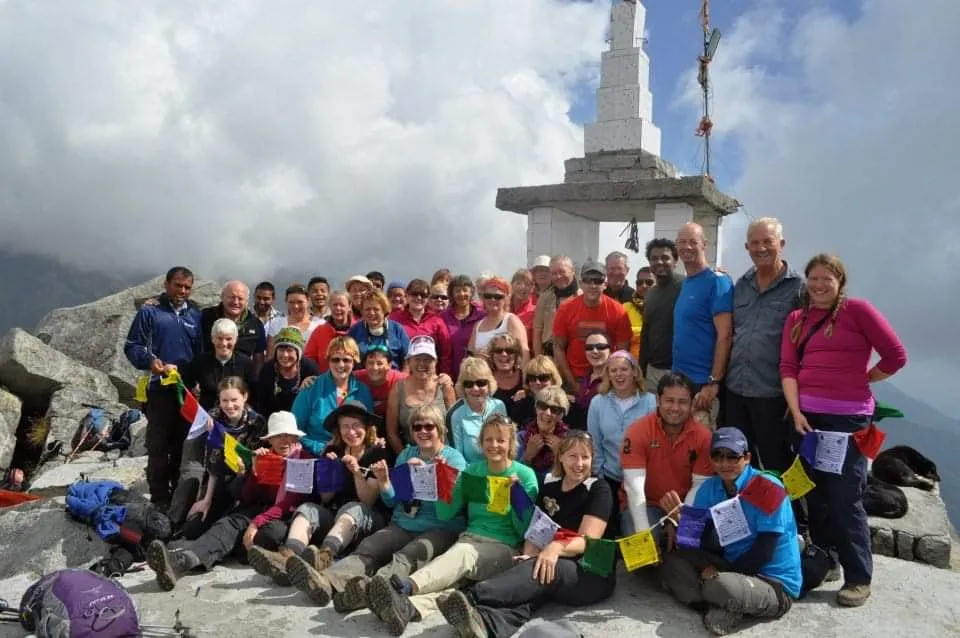
Some of the happiest groups we’ve guided in the Dhauladhar have been in their sixties and seventies. They didn’t walk fast. They started early, rested often, and enjoyed every hour of it.
Himachal treks for older walkers at a glance
| Trek | Highest point | How long | Who it suits |
|---|---|---|---|
| Kangra valley walks | 1,000 – 2,000 m | Half or full days | Everyone; a gentle start |
| Triund | About 2,875 m | 1 day, or 2 with a night | Reasonably fit first-timers |
| Kareri Lake | About 2,934 m | 2 – 3 days | Steady walkers who like quiet |
| Spiti village walks | 3,600 – 4,400 m | Short walks | Easy distances, but high |
| Indrahar Pass | 4,342 m | 4 – 5 days | Fit, experienced trekkers only |
What really changes after 50
Not as much as people fear. Stamina often holds up well; many of our older guests walk all day. What changes is:
- Recovery. You’ll feel a long day more the next morning. Build in an easier day after a hard one.
- Knees and balance. Going down steep, rocky ground is harder than going up. Most slips happen on the descent.
- Heat and cold. Your body adjusts more slowly, so layers matter more.
- Medicines. Some blood pressure and heart medicines change how you feel at altitude. That’s a conversation for your doctor.
Altitude and age
Here’s the good news: older people are not more likely to get altitude sickness. Medical guidance says people over 50 have slightly less risk, and being very fit doesn’t protect anyone. What matters most is how fast you go up.
So the rules are the same for everyone: climb slowly, sleep lower where you can, drink water, and don’t go higher with a headache. Triund and Kareri stay below 3,000 m, where altitude sickness is uncommon. Spiti is different: even easy walks there are at 3,600 m or more. Our post on altitude sickness in Spiti explains what to watch for.
How fit do you need to be?
A simple test: can you walk 5 km on the flat in about an hour without strain, and climb four or five flights of stairs without stopping? If yes, Triund is within reach. If not, give yourself a couple of months.
Six to eight weeks before your trip:
- Walk most days, building up to two or three hours with a light day pack.
- Find hills or stairs twice a week. Going down matters as much as going up.
- Strengthen your legs: sit-to-stand from a chair, step-ups, gentle squats.
- Walk in the boots you’ll trek in, so they’re broken in before you arrive.
See your doctor first
Before you book, see your doctor and tell them where you’re going and how high. Take your medicines with you in your day bag, not in the luggage on the pony. If you have heart or lung conditions, high blood pressure, or have had a recent operation, ask specifically about altitude and long climbs.
Check your travel insurance
Read the small print before you pay. Many policies:
- have an upper age limit, or charge more above a certain age
- cover trekking only up to a maximum altitude
- exclude pre-existing conditions unless you declare them
Make sure your policy covers the height you’ll reach and emergency evacuation from the mountains.
Knees, poles and going down
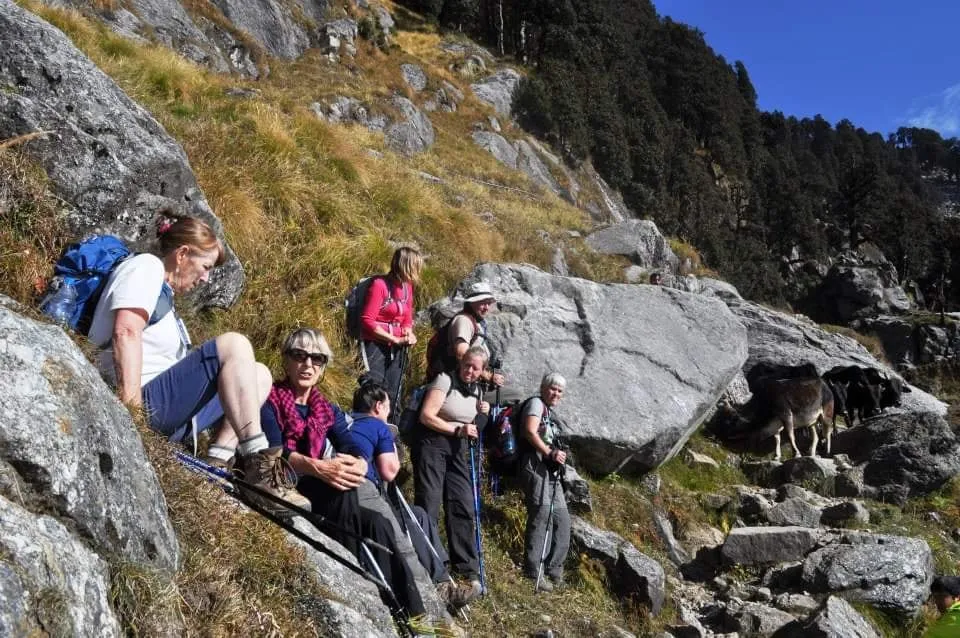
Trekking poles are the best piece of kit an older walker can buy. Use two, not one. On the way up they spread the effort; on the way down they take a lot of the strain off your knees.
On descents, take short steps, keep your knees slightly bent, and don’t rush. A knee support can help if you already have a weak knee. Most of the Triund path down is rough stone, so give yourself as long to come down as you took to go up.
Pace, porters and ponies
The secret of trekking happily at any age is pace. Walk slowly enough to talk. Stop for five minutes every hour. Start early, so you’re never racing the light.
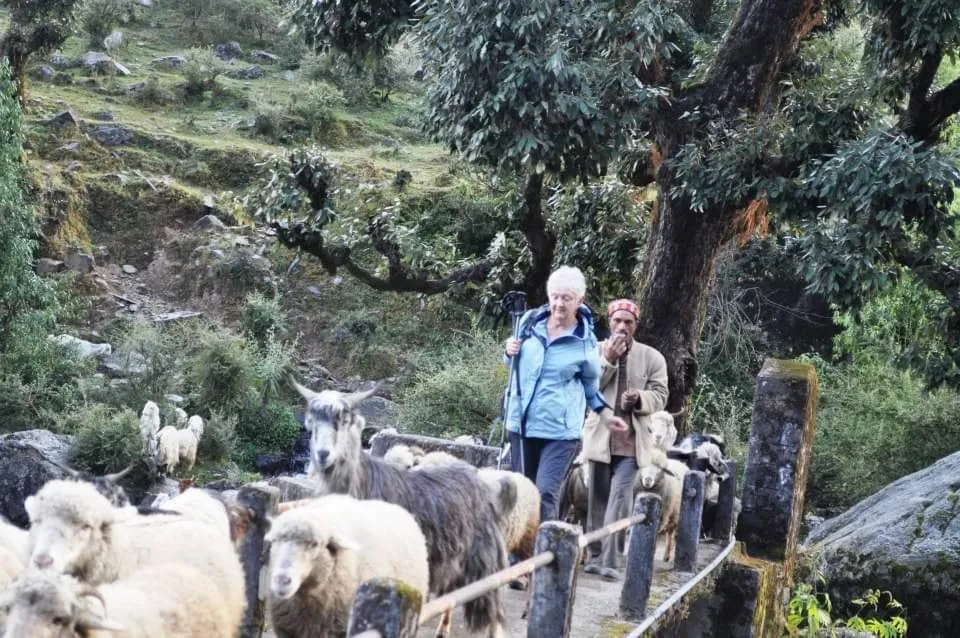
You don’t have to carry everything. On multi-day treks, porters or ponies can carry the tents, food and your main bag, so you walk with just a day pack. It’s normal here, and it means the trek is about the walking, not the weight.
Group trek or private trek?
- A group is sociable and usually cheaper, but you walk at the group’s pace. If you join one, ask about the age and fitness of the other walkers.
- A private trek with a local guide goes at your speed, stops when you want, and can turn round without upsetting anyone. For many older walkers this is the more relaxing choice.
Either way, choose a guide who sets the pace for the slowest person, not the fastest.
Can you trek in Spiti over 60?
Yes, but think of Spiti differently. The walks there are short and gentle, from one village to the next or up to a monastery, but they start at about 3,650 m and go higher. That makes the altitude the hard part, not the distance.
If you’re over 60 and going to Spiti, come in slowly through Kinnaur, rest on your first day in Kaza, and keep the walks short for the first few days. Talk to your doctor about altitude before you book, especially if you take heart or blood pressure medicines.
A gentle first week
Here’s roughly how we’d plan a first trekking week for walkers in their sixties:
- Arrive in Dharamshala and rest.
- An easy walk around Norbulingka and the tea gardens.
- A half-day walk above McLeod Ganj to get your legs going.
- Walk up to Triund and, if you feel good, stay the night.
- Walk down slowly, with a long lunch on the way.
- A rest day: monasteries, cafés, a massage.
- A drive to Bir, or another easy valley walk.
What to pack
- Two trekking poles and broken-in boots
- Layers: a thermal top, a fleece and a light down jacket
- A waterproof jacket, sun hat, sunglasses and sunscreen
- Your medicines, plus spares, and a copy of your prescriptions
- Blister plasters and a small first-aid kit
- A water bottle and snacks you actually like
Where we’d start
If it’s your first Himalayan trek, spend a few gentle days in the Kangra valley, then walk up to Triund and, if you feel good, stay the night on the ridge. Our Triund or Indrahar Pass and Kareri Lake or Triund posts explain the trails.
Our Kangra valley family week is gentle and flexible, and our Triund trek and Bir Billing flight is a good first taste of the mountains. Tell us your age, your fitness and what you’d love to see, and we’ll suggest a trek that fits you, not the other way round.
Quick answers
Can a 60-year-old trek in the Himalaya?
Yes, if they're in good health and reasonably fit. Many people trek in the Himalaya in their sixties and seventies. Choose a shorter, lower trek first, such as Triund or Kareri Lake, walk at your own pace, and see a doctor before you go.
What is the best Himalayan trek for seniors in Himachal?
Triund, above McLeod Ganj, is the easiest real Himalayan trek in Himachal: about 9 km each way to a ridge at about 2,875 m. Kareri Lake is longer but gentler per hour. Leave high passes like Indrahar until you've done one of those.
Are older people more likely to get altitude sickness?
No. Medical guidance says people over 50 have slightly less risk than younger adults, and that fitness doesn't protect anyone. What matters most is how fast you climb, so go up slowly and rest if you feel unwell.
How fit do I need to be to trek after 60?
A good test is walking 5 km on the flat in about an hour without strain, and climbing a few flights of stairs without stopping. Train for six to eight weeks before the trip with longer walks, hills and stairs.
Does travel insurance cover trekking for seniors?
Often, but read the small print. Many policies set an upper age limit, a maximum trekking altitude, or exclude pre-existing conditions. Check your policy covers the height you'll reach and emergency evacuation.
Sources
Last updated


